
DRY EYE
Overview
Dry eye is a common condition that usually affects both eyes. It can make your eye feel scratchy or irritated, and may make your vision blurry between blinks.
Dry eye can be uncomfortable, but will rarely cause you serious eye damage. It may develop because your eyes do not produce enough tears. But in most cases it is because your tears evaporate too quickly or do not spread evenly across the front of your eye..
What is dry eye?
Dry eye is a condition that causes abnormal changes in the tear film. These changes may cause your eyes to feel gritty or irritated, and can sometimes make. Here is a clear summary and detailed breakdown of the educational leaflet on Dry Eye shown in the images:
Overview & What Is Dry Eye?
-
Definition: Dry eye is a common, chronic (long-term) condition caused by changes in the quality or quantity of your tear film, which affects one or both eyes.
-
Symptoms: Scratchy, gritty, or irritated eyes, and temporary blurry vision between blinks. While uncomfortable, it rarely causes permanent vision damage (though severe, untreated cases can lead to pain or front-of-eye damage).
-
Tear Film Layers:
-
Mucin Layer (Inner): Closest to the eye; helps stick the other tear layers to the surface.
-
Aqueous Layer (Middle): Watery layer providing moisture and nutrients.
-
Oily / Lipid Layer (Outer): Produced by the meibomian glands in the eyelids; prevents tears from evaporating too quickly.
-
Causes and Risk Factors
Dry eye develops when tears evaporate too fast, aren’t produced in sufficient quantity, or become unstable/salty, causing inflammation.
-
Demographics & Age: More common in women, people of Asian ethnic background, and individuals over age 50. As you age, tear production decreases and eyelids become less effective at spreading tear film.
-
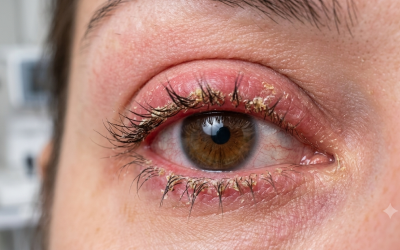
Meibomian Gland Dysfunction / Blepharitis: Blocked meibomian glands reduce the protective oily layer.
-
Environmental Factors: Wind, cold air, dry/heated environments, air conditioning, and smoky atmospheres.
-
Screen Use & Blinking: Extended focus on computer/TV screens or while driving reduces blink rate, accelerating tear evaporation.
-
Medications & Hormones: Hormonal changes during menopause, pregnancy, or from oral contraceptives, as well as certain medications or underlying health conditions.
-
Other Factors: Wearing contact lenses, low blink rate, abnormal eyelid position, or prior laser eye surgery.
Management and Treatments
1. Eyelid Hygiene & Makeup
-
Avoid placing eyeliner on the inner rim/edge of eyelids to prevent clogging meibomian glands.
-
Clean eyelid edges near lashes regularly from the inner corner outward (using gentle pulling away from the eye as advised).
2. Environmental Adjustments
-
Use humidifiers to add moisture to indoor air and lower heating temperatures.
-
Protect eyes outdoors with wraparound glasses or sunglasses.
-
Avoid direct air drafts, smoky environments, and dry atmospheres.
3. Eye Lubricants (Artificial Tears, Gels, Ointments, Sprays)
-
Drops & Sprays: Replenish missing moisture or the oily layer. Sprays applied to closed eyelids can restore the lipid film upon opening.
-
Gels & Ointments: Thicker formulas suited for overnight use or more severe dryness (may cause temporary blurriness).
-
Preservative-Free: Recommended if applied more than 6 times daily.
4. Advanced & In-Clinic Treatments
-
Punctal Plugs: Small plugs placed in the tear drainage channels (puncta) to keep natural tears on the eye surface longer.
-
Prescription Medications: Recommended by an optometrist for severe cases to control inflammation or increase tear production.
5. Computer & Screen Habits
-
Position the top of your monitor at eye level so you look slightly downward, exposing less eye surface to the air.
-
Take regular breaks to look away and deliberately blink or close your eyes for a few seconds.