
What is blepharitis?
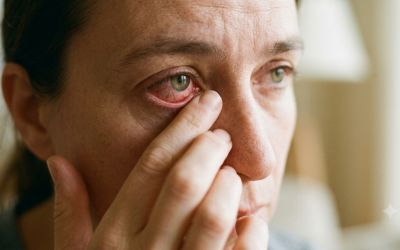
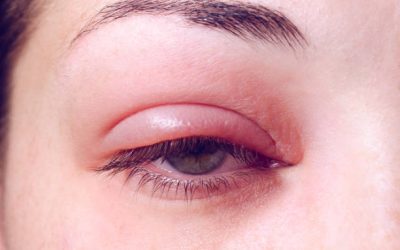
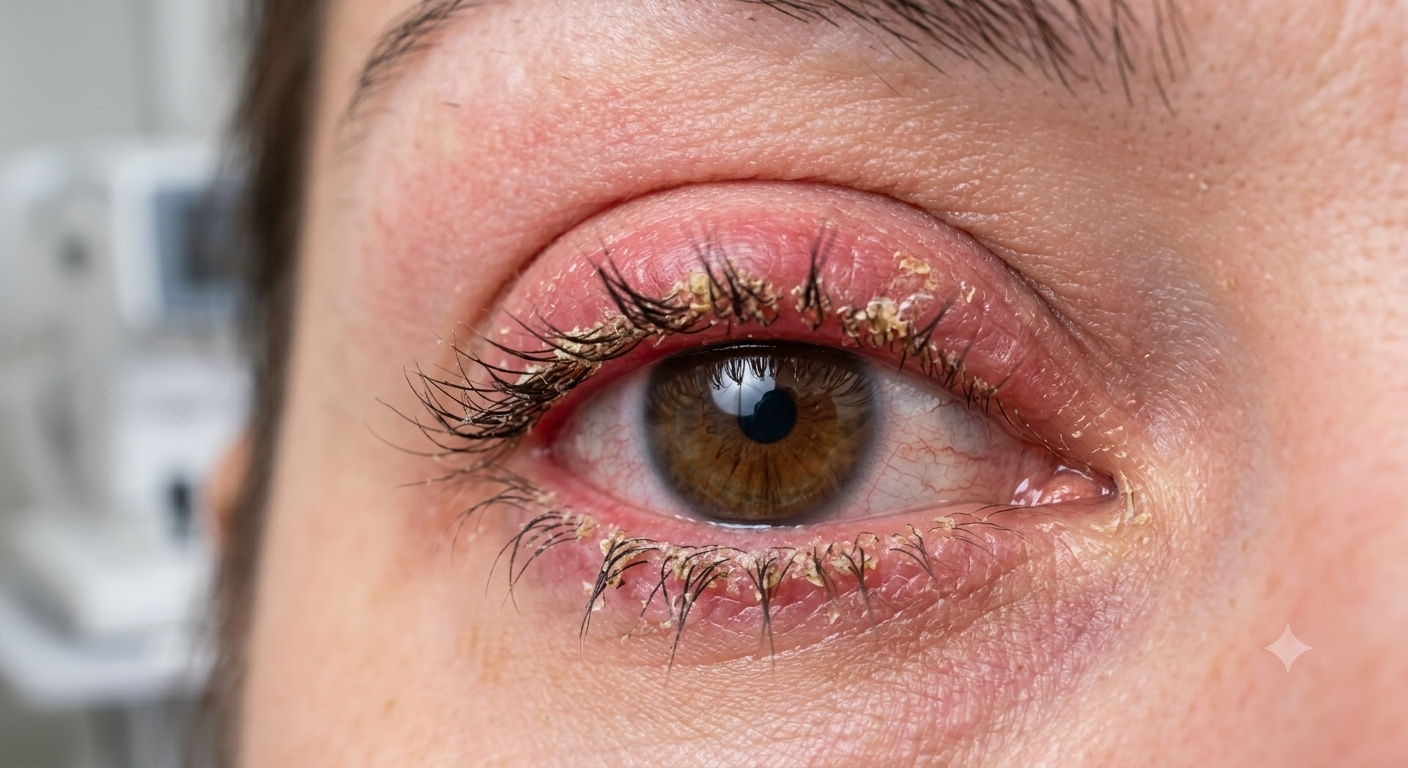
Blepharitis is an inflammation of your eyelids. It can make your eyelids red, your eyelashes crusty and your eyes may feel irritated or sore. It can also lead to burning, itching or stinging in your eyes.
The condition is not usually serious
Blepharitis is a chro
Why do I get blepharitis?
There are two types of blepharitis.
-
A
nterior blepharitis – this affects the outside front ed ge of your eyelids (near or among your eyelashes). It may be caused by bacteria called staphylococcus. -
Posterior blepharitis – this is also called meibomian gland dysfunction (MG
D).
Sometimes, anterior blepharitis and MGD occur together. This is called mixed blepharitis.
(Image diagram points to: blocked glands, scaling, blocked glands)
lookafteryoureyes.org
Managing blepharitis
1. Warm compresses
These work by melting the blocked material in the meibomian glands and loosening the crusts on the eyelid. Warm compresses come in a variety of forms, such as a warming pad or pack that heats in the microwave.
Warm compresses can be m
Whichever warm compress you use, place it on the edge of your closed eyelids for around five minut
2. Lid cleaning
There are different lid cleaning options to remove the crusts from the eyelashes. Your optometrist can advise you on which option is suitable
Gently clean the edges of your eyelids near your lashes. Wipe from the
You may need special lid cleaning treatments to help remove crusts or infestations from the lids and